

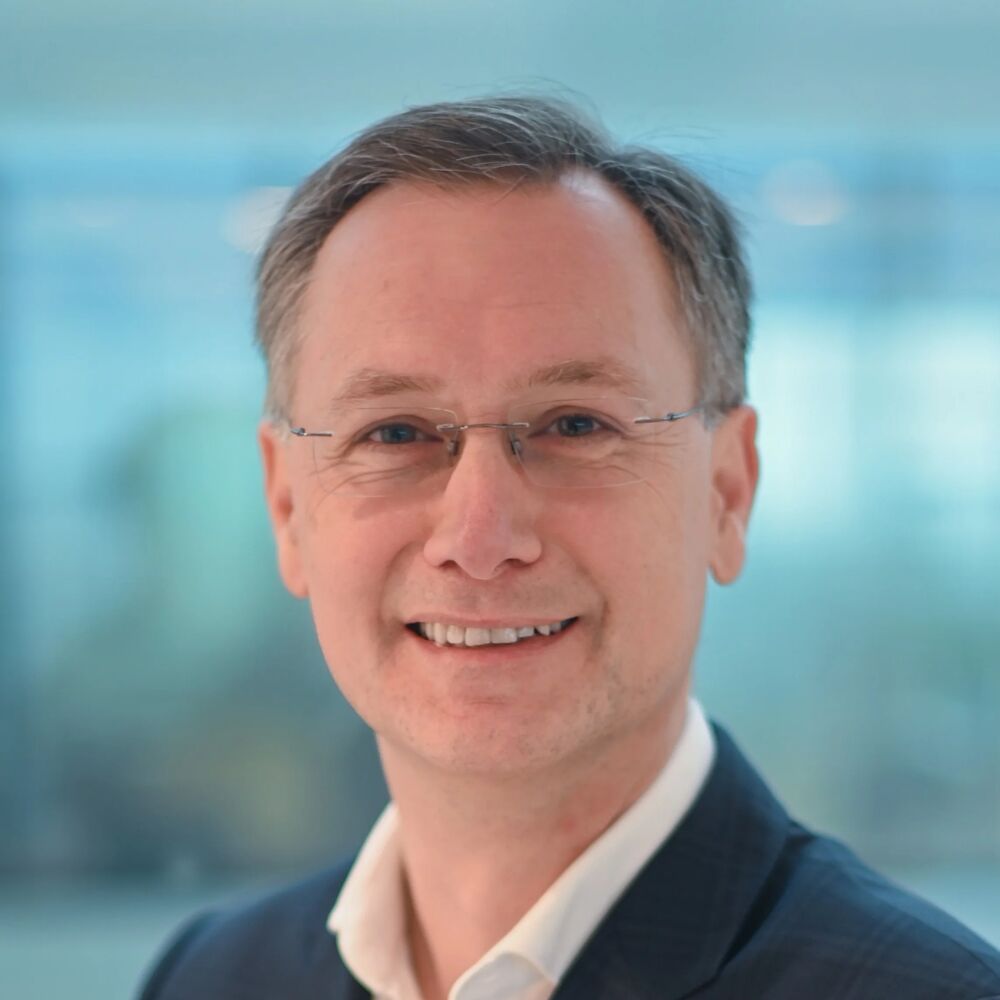
Willem Peter de Ridder is the director of Futures Studies. As a Strategic Foresight consultant, he advises organizations on exploring future developments and formulating resilient strategies and governance structures.

|
Menu

Strategic Foresight and Scenario Planning Master Class
The future isn't a point on the horizon. It's a range of possibilities.
Start date
December 7, 2026, Campus Tilburg
March 8, 2027, Campus Utrecht
December 6, 2027, Campus Tilburg
Duration
3 days
Language
Dutch
Costs
€ 4050
Rankings
TIAS Executive Education is ranked #1 in the Netherlands for participant satisfaction by the Financial Times, with a score of 8.7 out of 10.
Introduction
Every strategic decision is a bet on a future you cannot yet see. Which developments, from artificial intelligence to demographic shifts, will reshape your field in the years ahead, and what opportunities will they open up? In this masterclass, you don't learn to predict the future. You learn to explore it systematically. You gain proven strategic foresight methods to read trends, build future scenarios, and ground today's strategic choices in them. That's how you guide your organization through an uncertain world with confidence.
Download the brochure
Want to know more about costs, teachers, content, and dates? We will send the brochure directly by email.
Participant profile
This masterclass is designed for anyone who carries responsibility for strategy: executives and directors who set the course, managers and professionals who help shape it, and advisors and staff specialists who give decision-makers the insights to make the right calls. What unites participants isn't their job title, but their role: they think about the longer term and want to move their organization there with intent.
It's common for several people from the same organization to enroll together. That helps. A shared language and shared methods give future-thinking inside the organization more weight.
Participant functions
Executive Director | Director | Strategy & Policy Manager | Department Head | Strategic Advisor | ConsultantAverage demographics
47 years | 55% men & 45% womenAverage work experience
18 years

Why this program
Most leaders feel the uncertainty. Something is shifting in the market. AI is rapidly redefining what's possible. Society is on the move. But what it actually means stays vague. This masterclass turns that uneasy feeling into clarity and the capacity to act. You'll work with concrete, proven methods to recognize developments in market and society, interpret them, and translate them into opportunity. You don't just study how the methods work; you practice with them on cases participants bring from their own work. The result: from now on, you can stress-test the future-readiness of the decisions sitting on your desk today.
What will the program bring you?
You spot sooner and more sharply which trends and developments are reshaping your field, and you interpret them with substance instead of just reacting to them.
You build coherent future scenarios and use them to stress-test your organization's strategy.
You translate future visions into concrete strategic options and choices that keep your organization agile over the long term.
You know how to make decisions and set direction as uncertainty and complexity rise, and what kind of leadership that calls for.
About this program
Over three days, you develop a complete way of working to get a grip on the future: from exploring what's coming at you to translating it into strategy. The future here isn't a single destination, but a range of possibilities. You take home a coherent set of methods and tools and apply them right away. Alongside interactive lectures, workshops, and assignments, participant-led cases are a fixed part of the program: you work on questions from your own practice. The masterclass is taught by faculty with years of experience in strategic foresight, both academically and in practice.
Day 1: The World Around Us
The first day turns the gaze outward. What's coming at us, and how do you make sense of it? You meet strategic foresight as a discipline, explore how technology like AI and societal developments are reshaping the field, and learn to map and analyze trends systematically. You close the day with a much broader and sharper picture of the forces shaping your environment.
Day 2: A Picture of the Future
Isolated signals and trends, on their own, say little. On day two, you learn to bring them together into coherent future scenarios: multiple plausible pictures of how your sector could develop. You work extensively with scenario planning and engage with the core question: how do you plan for a future that by definition can't be predicted?
Day 3: Toward the Future
Pictures of the future only gain value when they lead to choices. The final day is about the translation to strategy. You learn to work with methods like Three Horizons and the Futures Triangle to connect scenarios to strategic options, and you practice an extended case on decision-making under uncertainty. You go home with a way of working you can put into action in your own organization immediately.
Create your own learning path and increase your impact
This master class stands on its own and serves as a building block for further learning. Would you like to combine multiple themes or build a personalized, cohesive learning path? Then you can combine this master class with other courses from the TIAS portfolio.
Broaden your perspective: the Master Class Bundle
Put together your own learning path from three master classes and connect the themes that are relevant to your work, from strategy and leadership to digital transformation. You decide on the combination and the pace, and you’ll benefit from an attractive bundle discount.
→ Discover the Master Class Bundle
Build a cohesive program: The Executive IMPACT Program
In the Executive IMPACT Program, you combine four masterclasses with guidance from a dedicated mentor. Over the course of one to two years, you’ll work on a real-world challenge from your own practice and apply new insights to your personal development and your organization.
Download the brochure
Want to know more about costs, teachers, content, and dates? We will send the brochure directly by email.
Teachers program
1 / 2
:quality(75))
:quality(75))
:quality(75))
Contact a Program Adviser
:quality(75))