

‘Over time, some organisations get better in taking on board innovations from other organisations because they learn to adapt rather than adopt ideas and practices for their own context.’ Jean Hartley, Emeritus Professor at the Open University in the United Kingdom, highlights one of the success factors in organisational change during a conversation with Woody van Olffen, Professor of Organisational Change and Development at the TIAS School for Business and Society, Tilburg University. They both conclude that ‘effective organisational change is ultimately about organisational learning and the role of leadership in encouraging and fostering it’.

|
Menu

‘Organisational change is about organisational learning and the role of leadership in it’
Tags:
Strategy Innovation & Leadership
Public Management & Non-Profit
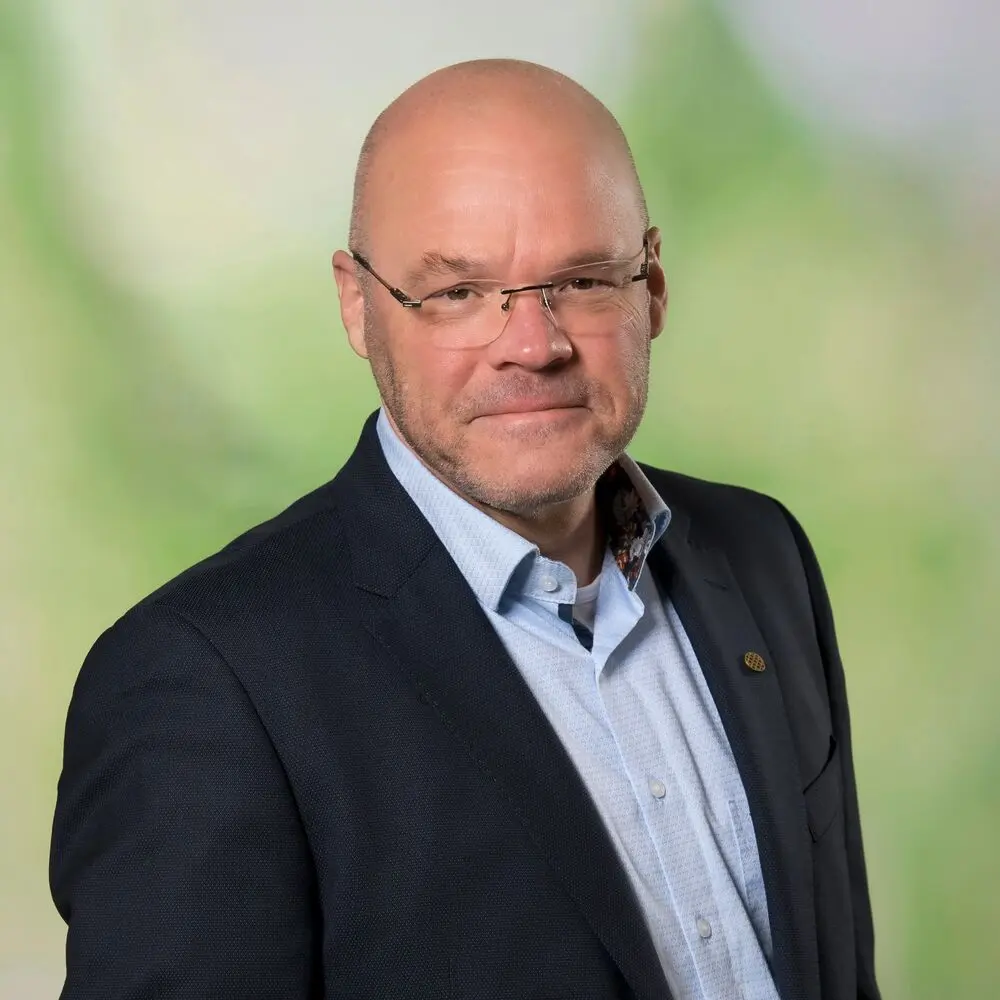
Author: Prof. Dr. Woody van Olffen
• Published:
November 10, 2026• Share:
Action research
In their conversation, Jean and Woody share their academic insights from years of working on organizational and cultural change. In Jean’s case these insights are from research into public services such as local government and policing, while Woody’ expertise lies in helping private sector firms lead and manage change. Both use the methods of action research. This research methodology aims to improve ways of addressing a specific, real-world problem while simultaneously studying the process. It bridges the gap between theory and practice by involving practitioners directly in their own settings.
Context-specific approach
According to Jean, the how-to of putting scientific interventions to practice by organisations in order to change definitely is not a one-size-fits-all routine. ‘It depends on the type of organisation, what it is they are trying to achieve, their culture, whether the organisation is good at organisational learning or is rather resistant to it. In my work with, for instance, police organisations, the first thing is to really understand their context, their world. What is problematic for them? What do they take for granted? What are they struggling with, what they are proud of, and so on.’
Part of the team
‘Once we've decided there's a project to be done, our first step would be to invite the police to allocate one or more people to come and join the research team, so you have the academic rigour of doing research while also drawing on practitioner knowledge and experience. It is also about encouraging the police to develop skills that help them step back from their organisation and ask diagnostic and analytical questions.’
A partner in learning
‘I recognise that,’ responds Woody. ‘It is like being a friendly outsider, involving the organisation in doing the research and helping the organisation come to grips with its own reality. What is actually going on? Why are we doing the things in the way we are doing them? What does this tell about us? And perhaps, along the way, also help them to recognise how they create their own tensions and their own problems and what the alternatives are. To sum up, really being a partner in learning.’
Learning to adapt
Jean: ‘We undertook one project which lasted nine years and involved all local governments in England and Wales, about 350 organisations. It was really interesting to see change over time across that population. In the early days, it was very much about, “Here's an innovation, we should adopt it wholesale. Or organizations would say that they couldn’t take up the innovation because of lack of money or the leadership was different or the citizens were different. But over time, some local authorities became very skilled at analysing the innovation and working out which elements of it would work in their own local authority, or how the change needed to be framed for that particular context. So, this idea of learning to adapt became really important. Some local authorities really got that over the years’
Political and managerial leadership
When Woody asks what the success on learning to adapt determined, Jean is unequivocal about it: ‘Both political and managerial leadership. Leaders at all levels who were really championing their own organisation and recognising its own locality, that it is serving the citizens, and being very, very encouraging, made the difference. For the political leaders, it was about providing political cover for staff to be able to experiment, take a few risks, and so on.’
Guardians of learning
‘So, the role of the leader in organisational change is to act as a shield for the people who are learning,’ Woody nods in agreement. ‘In my classes I always use the metaphor of a small seedling with two protective hands around it, and tell the students, “If you forget everything we talked about in this class today, stick with this image. This is your role. You are the guardian of the learning process of the people you are leading. That also means making sure that they are not hassled, that they are well funded, that they have political support, that there's psychological safety. Build and maintain a learning container for all.”’
Graft and grow
‘Your metaphor of protecting that seedling is interesting,’ responds Jean. ‘One of the metaphors I often use is that mobilizing innovation and change is about graft-and-grow (‘enten’ in Dutch) . The assumption in organisations is sometimes that a change is simply a technical matter – the underlying metaphor is plug-and-play. Instead, the gardening metaphor of graft and grow is to say: you've got your own ‘rootstock’, your own ideas, values and practices and you're putting in some ideas from elsewhere, but you will produce your own particular fruit from the tree. And you must water it, you must make sure that you've got compost around it, you must protect it.’
Political astuteness
‘Because graft and grow also concerns working with both formal and informal politics,’ Jean continues, – ‘whether in the public or private sector – leadership with political astuteness is key as well. What are the different groups, factions, lobby groups, interest groups – in short, all the external and internal stakeholders? A leader needs political astuteness to be able to read those different interests, goals and values in order to build sufficient consensus to be able to move forward. Political astuteness can be, not always, a very positive skill for leaders, because I think we have to start from the assumption that organisations are pluralist, not unitary.’
Tackle climate change…
‘Personally, I think it is politically naïve to say, “Let's look solely for the win-win and work together to tackle, for example, climate change, or help settle refugees”’, Jean argues. ‘As well as having shared goals, organisations that work together also have divergent goals. Otherwise they wouldn't be different organisations. So, part of the political astuteness skill is working out where you have shared goals, but also where your goals are divergent, and how you are going to deal with those divergences.’
Building trust
‘That applies even more so to leading networks of organisations or ecologies of organisations,’ Woody echoes Jean’s words. ‘The big societal environmental challenges of our times all involve multiple organisations working together. The complex nature of such multi-party collaboratives is that of a collective learning adventure. They can no longer be ‘controlled’ and ‘managed’ like old fashioned mega projects.. Recognise that there are different interests at play. Don't sweep them under the carpet. Always be realistic that there will be problems along the way. Like, for instance, by sharing at the start the thought experiment: “Six months into this project, we will grow suspicious of each other. What will be the first signs that that is going to happen? And what can we do when that happens?” By having that conversation beforehand and normalising that as early as possible, you can refer back to it when it happens.’ Jean: ‘Really good. I think that also has the advantage of building trust, doesn't it?’
About Jean Hartley
Jean Hartley is Emeritus Professor at the Open University in the United Kingdom. She was Professor of Public Leadership at the Open University (OU) from 2013–2024 and was the founding Academic Director of the OU's Centre for Policing Research and Learning for 10 years. She led the network of 80 OU academics across all faculties working in partnership with 24 UK police forces to create and use knowledge to improve policing for the public good. Her research is on leadership with political astuteness for managers, on public innovation and on public value across a range of public services.
About Woody van Olffen
Woody van Olffen is Professor of Organisational Change and Development at the TIAS School for Business and Society, Tilburg University. A common theme is his work is change and development processes in individuals, groups and organisations. His current research focusses on classifying planned change project types, change process intuitions and the anchoring phase of change cycles. Woody also works as a consultant helping boards align their organizational development efforts with their strategy.
Prof. Dr. Woody van Olffen
Professor
Woody van Olffen's scientific research has focused on a wide range of organizational topics, such as team composition, organizational commitment, fairness, and location choice.